Surgical Drains ExplainedIn most abdominoplasty procedures, the plastic surgeon will insert one or more surgical drains to help prevent a build up of fluid behind the abdominoplasty incision and in the area that was operated on. Each surgical drain is a clear tube that is placed through a very short incision below the main incision. This tube leads out of the body to a small bulb that is about the same size and shape as a hand grenade. Usually, your surgeon will have the drain tube exiting your abdomen through one or more incisions made at your pubic mound or sometimes at the ends of the abdominoplasty incision. 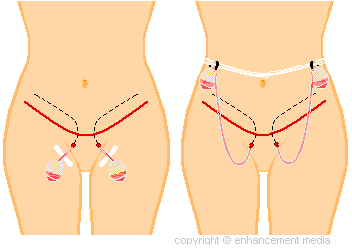 These diagrams show the placement of the tubing inside you with black dotted lines. The red line across the abdomen is the incision. The red dots above the pubic mound are the exit points for the tubing. The diagram at the left shows the bulbs taped to the thighs and the diagram on the right shows them pinned to a gauze belt. You may have only one drain, or you may have three. Different surgeons have different preferences Some surgeons want you to pin the drains below where they exit, which makes sense, but others don't see a problem with pinning them higher. Each of the bulbs should be emptied a few times a day. Each time you empty them, you squeeze them before your seal them. This creates a negative pressure in the bulbs that helps a bit with the drainage. The drains have a small tab on them with a hole that allows you to pin them to your clothing, to a makeshift belt, or to your support garment. You can make a belt to pin them to by taking some gauze bandaging and tying a length of it around your waist. Some folks on the Tummy Tuck Forum have suggested buying a few large pairs of cotton undies, "granny panties." You can either clip or pin the bulbs to the panties. You can also wear two pairs of these big panties and slide the bulbs between them. You will be asked to measure how much fluid has drained every day. Your surgeon may give you a chart for this purpose. He or she may also tell you to call if your drainage exceeds a certain amount, changes to a very red color, or starts to smell very bad. The fluid may be yellowish, brownish, reddish, or a mixture of those and there may be some solid bits floating around. Emptying each bulb is easy. First, squeeze your fingers along the tube from your body toward the bulb to "milk" the fluid in the tube into the bulb. Do this gently and do not pull on the tube. The bulbs usually have markings on the side so you can just hold them up and read the amount of fluid in them. If the bulbs don't have markings, use a little measuring cup to see how much fluid is draining. Write down the amount for each drain on your chart, if you have one. The bulbs have a little flip cap on them, so just flip open the little lid and dump the liquid in the toilet. You can empty the bulbs into a paper cup and then into the toilet if you want. Then squeeze the bulb tight to make a new vacuum, and close the lid. That's it. Usually, you empty the bulbs two to three times a day. Don't be surprised if one drain collects more fluid than the others or one is dry and the others still collect fluid. This can happen and does not mean anything. Surgical Drains and Showering And what should you do with those dangling tubes and bulbs during your shower? Some people wear a makeshift belt made from a length of gauze bandaging wrapped around the waist and tied. You can pin or clip the bulbs to your belt and shower hands free. Some say they have made a makeshift "necklace" of gauze and clipped the bulbs to this so that they were more mobile while they washed. Or you can hang a plastic clothes hanger on the inner handle of the shower door or over the shower curtain rod and attach them to the hanger. However, remember they are attached or those drains are going to remind you painfully if you forget and turn suddenly or step out of the shower! Tummy Tuck Drain Removal Essentially, the surgeon removes the drain by pulling the tube out. This may or may not be uncomfortable. Some people say it feels as though you had movement in your bowels or air moving around as they snake out. Some describe a lot of pain that was over quickly, while others said it was just a very odd feeling. For me, the first two surgical drains hurt like hell when they were removed, but the third drain, which was removed a week later, didn't hurt. The incision where the drain exited may bleed a bit, but that is it. And once the drains are removed, you are another step closer to being completely healed with a nice flat tummy! |
